








The development of the aviation business from the perspective of the aircraft cabin. A "must read"... charting the past, present and future of commercial aircraft design.
Airliner World
About the Book

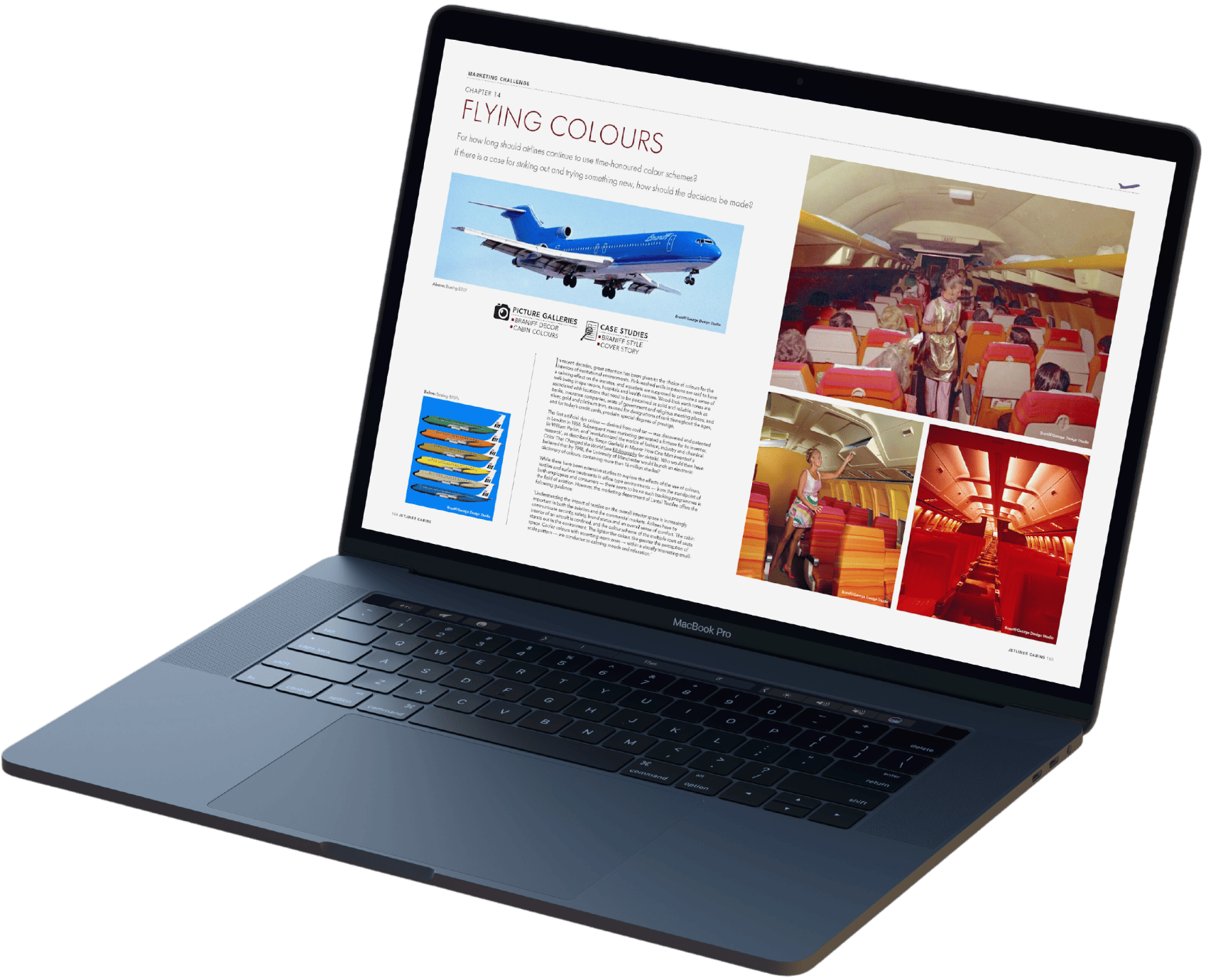
Read about airline uniforms — from Chapter 13/Flying Colours.

jetliner_cabins_pb

Jetliner Cabins

by Jennifer Coutts Clay
Published by J. Wiley & Sons

ISBN: 0-470-01933-6
2006

Laminated softcover edition
224 pages
450+ mostly color pictures
List price US$55


JETLINER CABINS, first published in hardcover in 2003, is the first comprehensive survey of the commercial-aircraft cabin environment from the late seventies to the turn of the millennium. This book develops and greatly expands on the author’s series of articles which appeared in Aircraft Interiors magazine from 2000 to 2002.

The updated softcover edition, published in 2006, showcases the high-efficiency next-generation aircraft: Airbus A380-800; Boeing B787 Dreamliner; Bombardier CSeries; Embraer E-Jets, the Legacy and the Phenom 100 and 300; and exciting new passenger-service products for first, business and economy class.

Author Statement

Although nearly 2 billion passengers per year travel on the scheduled airlines worldwide, until now there have been no books devoted specifically to the subject of jetliner cabins. My survey provides a summary of the developments that have taken place during the era of mass affordable air travel. In the past 25 years airlines have spent fortunes on interior upgrade programmes – to comply with escalating regulatory requirements, to address individual customer needs and to differentiate themselves from their competitors. What do passengers get for their money? How are new products such as sleeper seats and lounge bars integrated into existing floor plans? Why do some cabin environments feel more welcoming than others? This book is where readers will find answers to some of these difficult questions.

Excerpt from Jetliner Cabins Chapter 13/Flying Colours

Courtesy Thai International - This image is featured in Jetliner Cabins, Chapter 13/Flying Colours, by Jennifer Coutts Clay www.jetlinercabins.com, published by John Wiley & Sons Ltd.

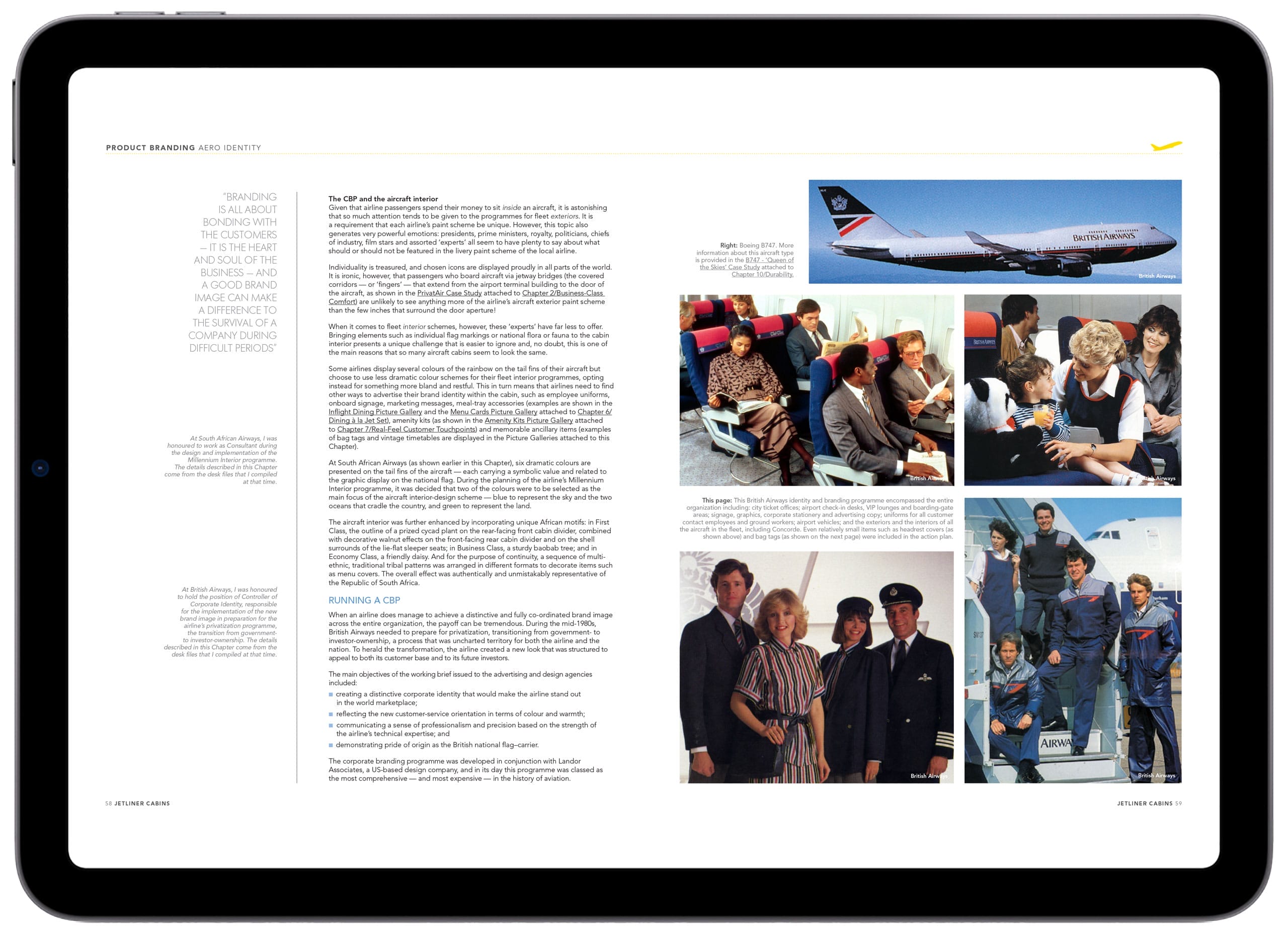
“And who can blame passengers for asking: Why do the pilots and flight attendants from so many different airlines all look almost the same in those dark blue outfits? In view of the airline industry’s strong maritime heritage, it is not surprising that aircraft captains would wish to emulate ships’ captains in their preference for dark blue uniforms. This is a reflection of the concept of the guild-type mentality of a specialist work force, where the strength of the bonds of brotherhood transcends the interests of individual employers. Today, however, customers say that the uniformity of this dress code makes it difficult to tell which pilot belongs to which airline.

As for the cabin staff, in the early days of flying, their uniforms communicated their special job skills, such as those of stewards and nurses, for which they had been recruited by the emerging airlines. However, as the aviation business developed, these flight attendants fought battles with uniform-planning committees: they wanted to be seen as adjunct cockpit crew rather than as symbols of nursing, hosting and hospitality. The argument is that their primary role relates to safety on board the aircraft. Over the years, airlines worldwide have acceded to the wishes of their cabin crews, and blue is now the colour most frequently used for their uniforms.

Not surprisingly, the airlines have had to consider adding scarves, collars, cuffs, bows, belts, buttons and assorted details, in all the colours of the rainbow, to achieve even a minimum level of distinctiveness. Still, there are a few notable exceptions that have gone much further in helping to brighten up the airline world. For example, for nearly 30 years the softly smiling Singapore Airlines flight attendants have worn the uniquely coloured batik ‘Sarong Kebaya’ outfits (see Product Branding section) originally created by the Parisian designer Pierre Balmain. The memorable colours of the Scottish tartan kilts of the British Caledonian cabin crew are still the stuff of high-flying legend, and at Thai International the exotic hues of the glorious silk gowns, sashes and fresh orchids worn by the glamorous flight attendants evoke fantasies associated with James Bond-type movies.”


Cover Story

Since Jetliner Cabins was first published in 2003 (the centenary of the Wright brothers’ first flight), I have received several requests for more information about the cover picture. Enquiries have included: “It looks a bit like an Airbus aircraft – but which one?”; “Please confirm whether this is a Boeing jet?”; and “Why the 2+1+2 configuration?”

Hardcover Full CoverThe answer? The computer-simulated picture contains architectural and design elements associated with aircraft produced by both manufacturers. The ingenious wraparound treatment was the brilliant brainchild of Christoph Berg, the director of ACA, which specialises in computer graphics, and whose words of wisdom are quoted in Chapter 15/Upgrades: Refurbishing Aloft. The aim was to concentrate attention on a generic cabin environment rather than comparing the characteristics of individual aircraft types. Featuring a wide-body twin-aisle aircraft makes it clear that we are dealing with modern jetliners – as opposed to the older aircraft types (which were all single-aisle)

The double-seat units fitted nicely along the sidewalls – but how to handle the spine of the book? One single seat in a row is unusual but not unknown. For example, in the 1980s, Pan Am flew individual centreline seats near the front of its first-class cabins, and Singapore Airlines currently uses a similar configuration for its luxurious SkySuites on its Boeing B747 fleet.

Published in <em>Aircraft Interiors International, September  2005, page 125</em>

Working from the superlative aviation-grade collections at Lantal Textiles, Monika Luethi, Lantal’s director of design (whose valuable comments appear in Chapter 12/The Leather Forecast), coordinated a group of decorative patterns for the carpet, curtain fabric and seat-cover upholstery. The organic motifs illustrate a number of points covered in those sections of the book that focus on the soft elements of cabin décor schemes. As shown in our picture, the favourite secondary-accent options ranged from eye-catching yellow and ecologically correct green to the classic, winning blue (a topic debated in detail by Lantal and others in Chapter 13/Flying Colours).